Between 2021 and 2025, the Lost Peatlands of South Wales project successfully restored over 240 hectares of formerly afforested peatland, transforming damaged upland habitats back towards healthy blanket bog. This work took place across our three Habitat Restoration Areas (Castell Nos, Cregan and Cwm Saerbren) as well as 154ha within the Pen y Cymoedd Wind Farm Habitat Management Area delivered in partnership with Natural Resources Wales and Vattenfall.
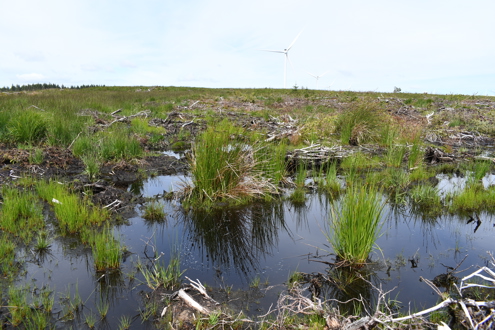
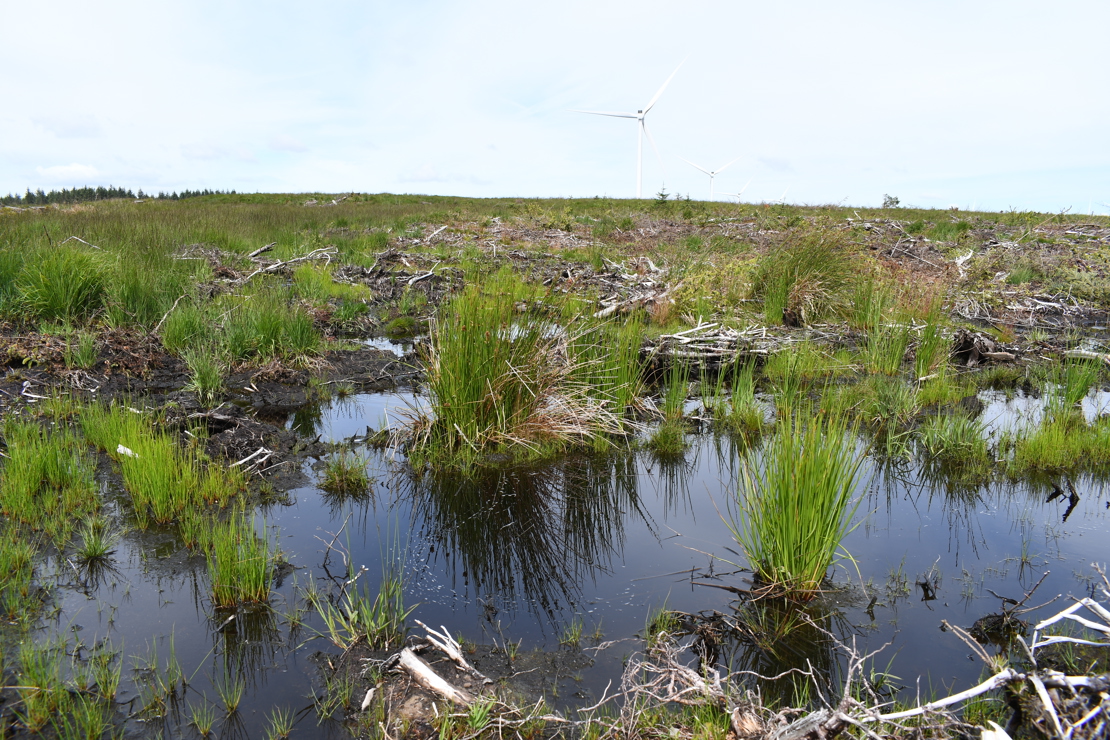
During the development phase of the project, our ecologists carried out extensive baseline surveys, including peat depth and vegetation assessments, which guided our restoration plans. These surveys confirmed that this large, interconnected blanket bog reaches depths of up to 6m in places, typically averaging 2–3m of carbon‑rich peat.
Early test‑plots at Pen y Cymoedd helped refine our restoration techniques, and the project also benefitted from shared experience across Wales and the wider UK. Because forest‑to‑bog restoration is still an emerging practice, especially on shallower upland peat, the work delivered here now provides valuable new evidence and best‑practice learning for future projects.
Our restoration aimed to raise water levels and re‑establish the conditions needed for recovering bog vegetation. To achieve this, we used a combination of techniques including peat damming, timber/compound dams, stump flipping and ground smoothing to reverse the effects of historic forestry drainage. Across all sites, thousands of metres of drainage channels were blocked using peat taken from small, carefully located borrow pits.
These works have already resulted in significantly higher water tables at Castell Nos and Cwm Saerbren, with positive trends also emerging at Cregan. Sphagnum moss — the key bog‑building plant — was reintroduced using over 60,000 plug plants, and early monitoring shows excellent establishment and growth.
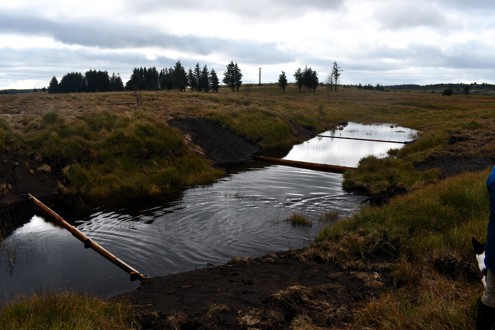
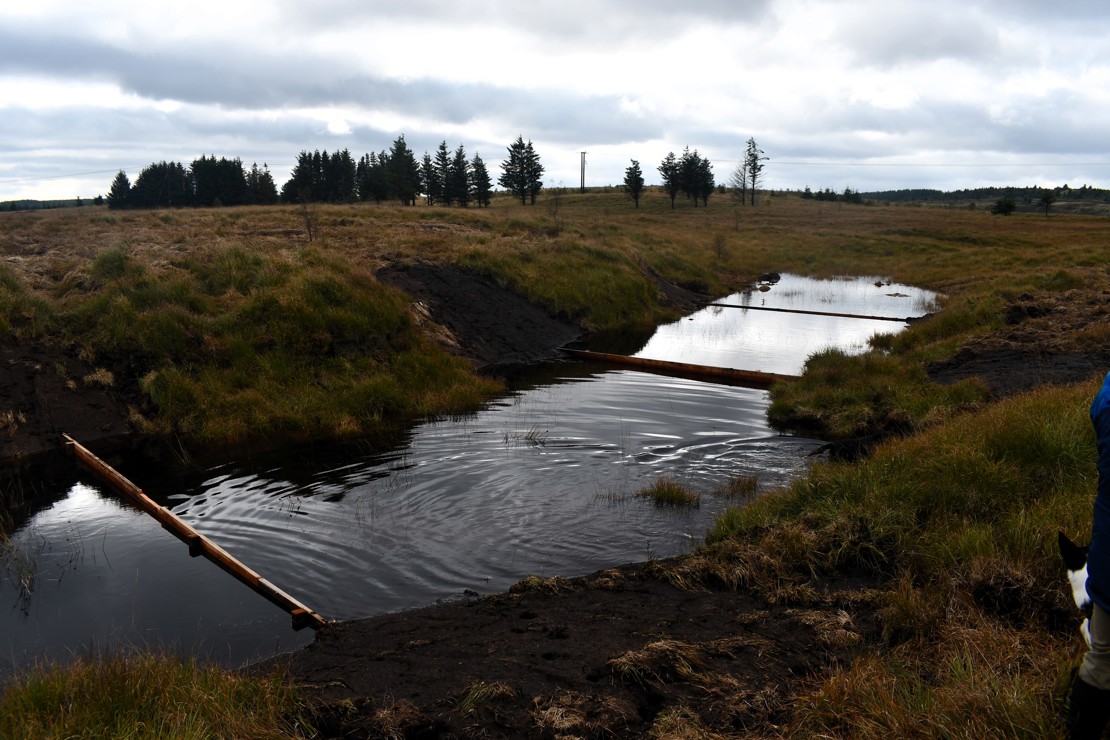
Restoring peatlands in previously afforested areas presented unique challenges, from remnant brash and stumps to access constraints and the need for careful scheduling around wildlife such as water voles and ground‑nesting birds.
Adaptive management was crucial, allowing field teams to alter plans in response to ground conditions, market‑driven delays in felling operations, and additional ecological considerations. Despite these challenges, the restoration programme was completed to a high standard, and monitoring shows encouraging ecological recovery, including the spread of bog‑specialist species and the expansion of water vole habitat at Castell Nos.
Through this work, the project has made a significant contribution to UK peatland restoration commitments and to tackling the climate and nature emergencies. By re‑wetting damaged peat, we are helping these habitats regain their function as long‑term carbon stores, reducing downstream flood risk, improving biodiversity, and making the uplands more resilient to wildfire and climate change.
The lessons learned and evidence gathered — including hydrology, vegetation, greenhouse gas fluxes and carbon export studies — will inform best practice across Wales and beyond for years to come.