Active Travel
Our road safety officers work to make Neath Port Talbot's roads safer for everyone.
Active Travel is about making our everyday journeys - such as travelling to school, work or the shops by foot, cycling or wheeling.
Active Travel will save you money, improve your health and help the environment.
View NPT’s approved ATNM.
This plan sets out the vision for active travel and how the active travel network will be improved and extended in NPT over the next five years.
Changing the way we move around Neath Port Talbot will have a massive impact on your community. Did you know? 2 out of 3 journeys are less than five miles. If its not far, leave the car.
Need a bit of support to find your feet?
Useful tips to help you plan your journey.
We need your help as we shape Active Travel plans to improve towns and villages in Neath Port Talbot.
We are striving to make it safer and easier for people to walk, cycle and wheel in and around the county.
See the cycle storage and cycle barrier locations we have mapped out.
What is Active Travel?
Active Travel is about making our everyday journeys - such as travelling to school, work or the shops by foot, cycling or wheeling.



How will active travel help me?
You will save money
Cars can be expensive. Vehicle tax, maintenance, and insurance costs around £969 per year. And that doesn’t include the fuel to power it.
You will improve your health and wellbeing
Walking regularly can reduce the risk of heart disease and active travel helps to ease stress levels and benefit your mental wellbeing.
You will help your community and the planet
Active travel cuts congestion, carbon dioxide (CO2) emissions and other air pollutants.
You will save time
It’s quicker than you think – you can walk a mile in around 15 – 20 minutes or cycle it in five. It could take longer to find your car keys!





Active Travel Network Map
Our Active Travel Network Map shows where walking and cycling routes already exist (Existing Routes) and where upgrades or brand new routes are anticipated for the next 15 years (Future Routes).
As set out by Welsh Government these routes should be in the following areas:
Neath, Port Talbot, Pontardawe, Croeserw, Cymmer, Brynamman, Gwaun Cae Gurwen, Blaengwrach, Glynneath, Cwmafan, Seven Sisters and Resolven.
This is important because we are able to apply for funding from the Welsh Government each year to implement the proposals on the Active Travel Network map. If routes are not on the map they are not eligible for funding.
View the latest Active Travel Network Map approved in 2022:
Downloadable version of our Active Travel map
Active Travel Delivery Plan
The Neath Port Talbot Active Travel Delivery Plan sets out the blueprint for how we intend to encourage and facilitate a change in travel for local journeys by walking, cycling and wheeling (e.g. wheelchairs, scooters, prams). The Active Travel Delivery Plan recognises the economic and social value of active travel, articulating the role of different stakeholders and identifying priority actions that reflect resources.
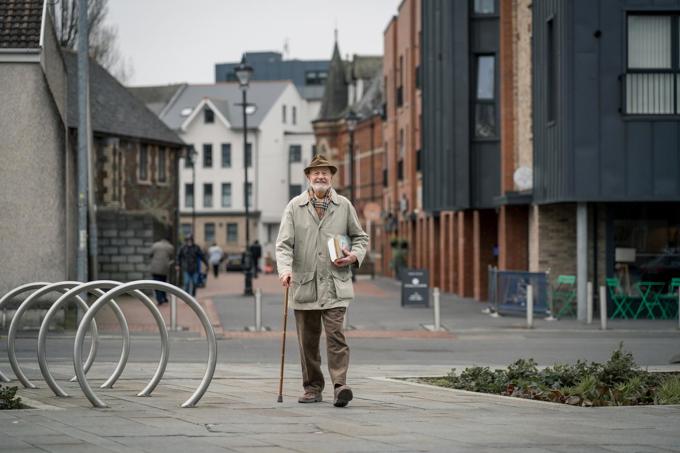
Greener, Happier, Healthier
Up and down the country, more and more people are adopting active travel, to be:
- greener
- happier
- healthier
Changing the way we move around Neath Port Talbot will have a massive impact on your community. And you’ll discover new sights and sounds you’ve never come across!
Did you know? 2 out of 3 journeys are less than five miles.
Choose walking, cycling or wheeling



If it’s not far, leave the car!

Get inspired
Need a bit of support to find your feet?
Whether it’s taking things slow on a short walk or cycling to get around, being active can benefit us all.
Joining a local cycle club is a great way to get advice on cycling, the type of cycle to get to suit your purpose, plus it's a great way to enjoy the benefits of cycling, keeping fit and making new friends, below are some local cycle clubs you may wish to consider joining.
Swansea Wheelrights are a Swansea cycling club where the focus is to help get people on bikes by, eg, providing beginners' classes.
The Port Talbot Wheelers organise a variety of open races and time trials during the year. They have various rides throughout the week that suit varying standards.
The Swansea Cycle Group, cycle in the Swansea and outlying areas. All ages and levels are catered for but please note under 16 year olds must be accompanied by a parent or guardian.
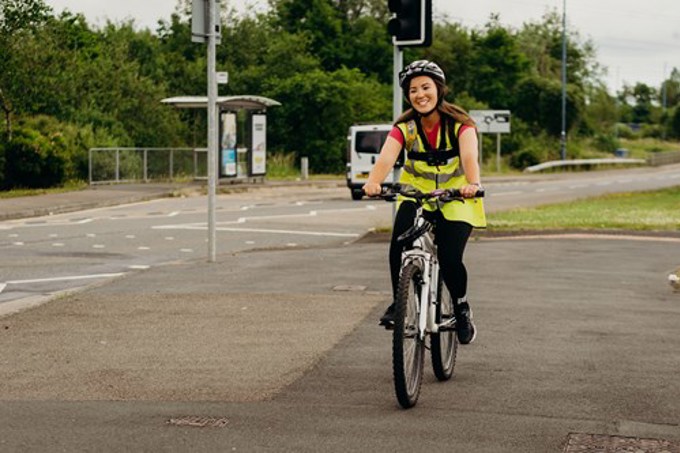
Be prepared
- Lighten the load by keeping things at your destination when you can e.g. shoes or a second hairbrush.
- Small waterproof bags will keep your belongings safe from rain, sweat, or spillages without needing an expensive backpack.
- If you carry food, think about what might travel well and put it in an appropriate container.
- Lay everything out the night before for a morning trip. You will be less likely to forget something!
- Be active for as much or as little of your journey as you want to be. Getting off the bus a stop early and walking an extra 10 minutes counts.
- Team up with a friend or colleague to motivate each other and have some company.






Active Travel consultations
There are currently no live Neath Port Talbot active travel consultations.
If you would like to be involved in future Neath Port Talbot Active Travel engagement events please email activetravel@npt.gov.uk and we will inform you when the next survey goes live.
Route development
We are striving to make it safer and easier for people to walk, cycle and wheel in and around the county through improving walking and cycling routes and facilities for everyday journeys. This section details the active travel schemes that we’ve developed in recent years through Welsh Government Active Travel Funding.
Improvements to routes
The Council makes byelaws to help manage public open spaces so they are safe, welcoming and well cared for.
The byelaw for the Gnoll Grounds and War Memorial Gardens explain how these areas can be used. They help protect their historic and commemorative importance and support safe shared use by residents and visitors.
These rules may be reviewed and updated to reflect changes in law, policy or local needs. Full details of the Second Written Statement are available in the Gnoll Grounds and War Memorial Gardens documents.
The only proposed change (a cycle route between the Gnoll Grounds and War Memorial Gardens) is set out in the notice to amend byelaws.
The draft byelaw shows the proposed wording.
These plans are proposals only
The pedestrian and cycling routes linking Coed Darcy to Neath fail to provide accessible or adequate infrastructure for residents, including those with disabilities.
The pedestrian footways connecting lower Skewen to Neath Abbey require infrastructure upgrades to comply with accessibility standards for residents with disabilities and parents with pushchairs.
Coed Darcy was originally envisioned as a self-sustaining development complete with its own schools and retail; however, until these materialise, residents remain dependent on external infrastructure.
A funding bid has been submitted to the Welsh Government’s Regional Transport Fund to enhance pedestrian footways extending from Coed Darcy through Skewen and into Neath Abbey.
Downloads
-
Pedestrian improvement works in Coed Darcy, Skewen and Neath Abbey (PDF 2.77 MB)
-
Glossary of design elements (PDF 942 KB)
Scheme development overview
We are working to improve roads and public spaces in the Sandfields area so that walking, cycling, and wheeling become safer, easier, and more attractive options for everyday journeys.
Progress so far
Feasibility and early design (2022–23)
A study identified 10 routes across Sandfields for potential upgrades. These ranged from small-scale improvements such as dropped kerbs and tactile paving (to support visually impaired users), to larger interventions including new cycle lanes and pedestrian crossings.
Public engagement and next stage (preliminary) design (2023–24)
In early 2024, we carried out stakeholder and public engagement to gather views on the proposed upgrades. Following this, a business case and first designs were prepared for the top three priority routes:
- Seaway Parade, Handel Avenue, Purcell Avenue and Scarlet Avenue
- Princess Margaret Way
- Victoria Road and St Paul’s Road
Finalising the designs - detailed design (2024–26)
Work progressed to finalise designs for these three priority routes, so they are ready to be constructed.
Placemaking and public realm expansion (2025–26)
The scope of the project was expanded to include placemaking and public realm improvements, aligned with the wider Aberavon Seafront Masterplan. This includes greening, play features, and enhancements in four key areas:
- around Memo Beach Café
- next to the skatepark (off the promenade)
- approach to Tywyn Primary School (off Victoria Road)
- green area on Purcell Avenue
Two public drop-in sessions were held in September and October 2025 to capture feedback on initial ideas. Designs are now being developed, with completion expected in early 2026. This public engagement exercise is now closed. We will publish a summary of your feedback in due course. Thank you for participating.
Delivery of minor works (2025–26)
In the meantime, early physical improvements are being delivered, including:
- missing dropped kerbs and tactile paving on key walking routes
- new cycle storage facilities
- a zebra crossing installation
Construction phase (2026–27 onwards)
We are in the process of applying for funding through the Regional Transport Fund to begin construction. If funding is received next year, works are expected to continue into 2027–28.
Further details on construction timeframes will be shared in due course.
Key documents
Sandfields Active Travel & Public Space Improvements - Stakeholder and Public Engagement
Sandfields Active Travel Masterplan: Public Engagement Report (2024).
We’re excited to share that Phase 1 of the Neath to Cimla Active Travel Project is officially underway.The contract has been awarded to GD Harries & Sons Ltd , with construction starting on 13th October 2025.
This phase will deliver a walking and cycling route connecting Neath Town Centre, beginning at Forster Road, passing through Gnoll Country Park, and continuing to Afan Valley Road (B4287) alongside Crynallt Primary School. These improvements will make walking, cycling, and wheeling safer and more convenient—helping residents choose Active Travel as their preferred way to get to work, school, or the shops.
Phase 1 includes:
- widening footpaths for shared use, allowing people to walk and cycle safely side by side
- installing raised plateaus at key junctions to support safer crossings for those with reduced mobility
- creating new sections of shared use path to improve route continuity
Works are expected to be completed in early 2026, with Phase 2 to follow. We’ll keep you posted throughout with regular updates.
This project is funded by the Welsh Government’s Active Travel Fund grant award, which means it can only be spent on walking, wheeling, and cycling improvements.
A consultation took place between September and October 2024. We asked residents their opinions on the proposed upgrades. See the proposals and the results of the consultation.
The Neath Town Centre Masterplan is aimed at transforming how people move through Neath Town Centre. The project seeks to enhance walking, wheeling, and cycling infrastructure to create a safer, more accessible, and environmentally sustainable town centre. The council is focusing on three specific routes being further developed this year:
- Route 1: Neath Abbey Road, Cadoxton Road, and Bridge Street
- Route 2: Cadoxton Road, B4434, Riverside Road, and Prince of Wales Drive
- Route 3: A section of Gnoll Park Road
Possible improvements include small-scale enhancements like dropped kerbs and tactile paving, as well as bolder changes like creating shared-use paths and introducing new safe crossing facilities for all users.
With these introductions, Neath will become a more connected and inclusive place for all residents and visitors.
A report has been produced summarising the feedback received from stakeholders and the public during the concept design and explaining how the comments will be considered in the future.
The initial public consultation for the Neath Town Centre Masterplan took place from 10 March to 7 April 2025. We appreciate all the feedback received during this period.
The walking and cycling route alongside Fabian Way and Ffordd Amazon is a key route for people commuting to Swansea from Neath Port Talbot and vice versa. Minor improvements (for example, improving drainage, cycle signage and road markings) were undertaken on this active travel route to make it easier for users to navigate and to bring it up to Active Travel (Wales) Act 2013 standards.
This popular link between Dwr Y Felin Comprehensive and Neath Town Centre received active travel funding in 2020 to improve the footway between the existing footbridge and Neath town centre. Works included resurfacing and the installation of dropped crossings/tactile paving to allow better access for all types of users.
Largely along the Neath Canal, this picturesque route received active travel funding over a four-year period. Improvements undertaken in this timeframe include resurfacing, barrier removal, improving signage and installation of a speed reduction crossing on the B4434 between Briton Ferry and Tonna. These upgrades have enabled members of the community such as those with prams, wheelchairs or mobility scooters to travel between the residential areas of Briton Ferry and Tonna to the shops in Neath easier and with less restrictions. It has also encouraged more people to use the route.
Before and after photos
Neath Canal before the improvement work
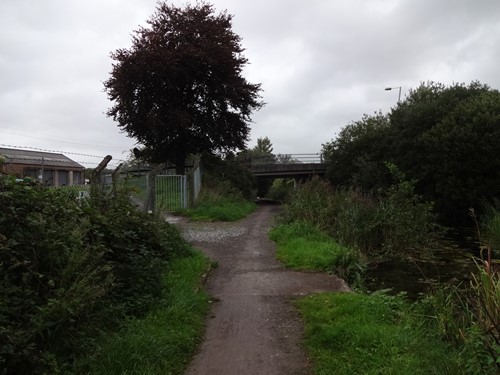
Neath Canal after the improvement work
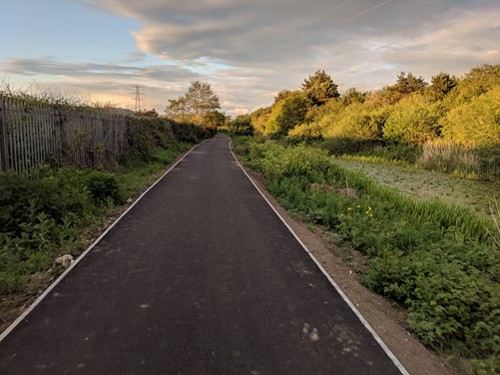
Following a mixture of riverside paths, new purpose build sections and old railway lines, national cycle route 43 provides an important walking and cycling link from Pontardawe to Swansea and Ystalyfera on almost entirely traffic free paths.
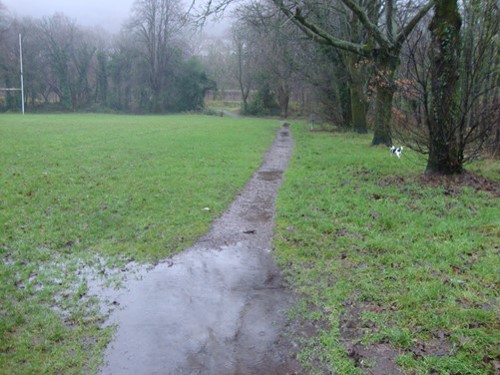
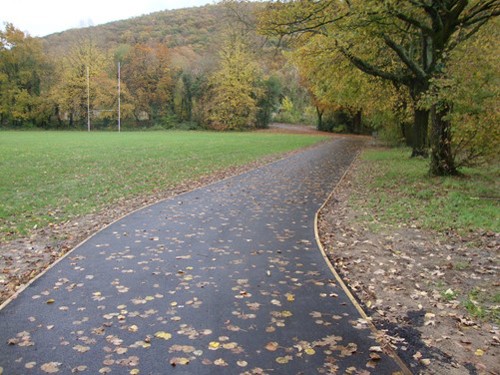
Improvements to this route were largely from Pontardawe town centre to the Swansea boundary, it involved upgrades to surfacing, (including providing a tarmac path around the edge of Pontardawe Recreation Ground) and removal of cycle barriers. This has provided better access for all users including disabled people.
Before and after photos
Pontardawe cycle route before the improvement work
Pontardawe cycle route after the improvement work
This scheme involved construction of a small section of route between the National Cycle Network and Godre'r Graig. Works included obtaining landowner permission to undertake the works, resurfacing the route, raising the parapets (safety barrier) on the footbridge, barrier removal and drainage improvements. This has provided a safe walking route linking Godre'r Graig to the rest of National Cycle Route 43 and beyond.
The villages of Blaengwrach and Cwmgwrach are separated from Glynneath by the A465. The only safe pedestrian route providing a link from these communities to Glynneath is through an underpass under the A465 and across a footbridge over the river Neath. The footbridge over the river Neath has been replaced by Neath Port Talbot following irreparable damage to the previous bridge during storm Dennis. The new footbridge was constructed with greater width to allow the construction of a shared use path. Active Travel funding was used to widen the existing footways from the newly constructed health centre to the new footbridge. This improved accessibility for all including wheelchair users and cyclists.
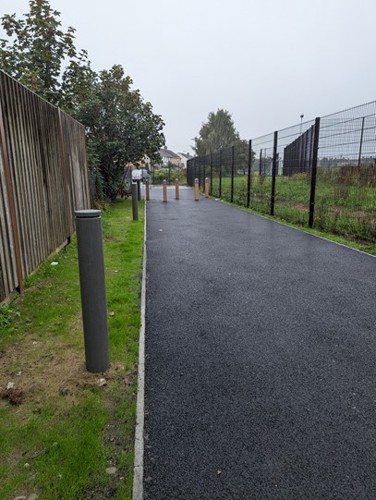
Improvements have been made to active travel routes: FR-PT-SU065 and FR-PT-SU064 on Southdown Road and Southdown Court to improve walking and cycling links between Baglan Bay Retail Park and Sandfields housing estate. Works included:
- widening and resurfacing of path to enable shared-use of the path
- improvements to junctions including adding tactile crossing points throughout
- improvements to lighting near the bridge access
Significant enhancements have been made to strengthen the connection between Tonna Hospital and the surrounding community. These efforts have focused on improving access to local shops and public transport, supporting residents’ Active Travel needs.
The completed work includes:
- widening existing footways
- improvements to the crossing facilities at junctions. These include a raised roundabout and numerous dropped kerbs with tactile paving through the village
- reduction in speed along the route from 30mph to 20mph and the introduction of a transition zone between the 20mph section and 60mph section
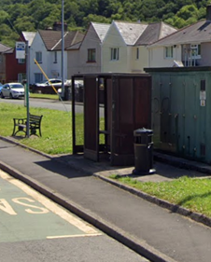
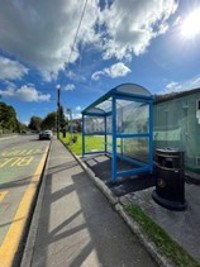
- relocation of the bus stop to allow the improvement of the side road junction
- installation of seating on the route
- installation of a green wall to enhance biodiversity and the local environment
Before and after photographs
Tonna Uchaf junction to Pen-Y-Byn, Tonna
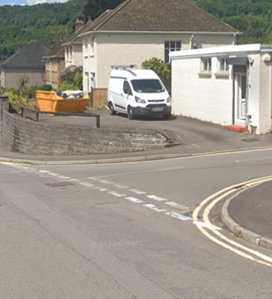
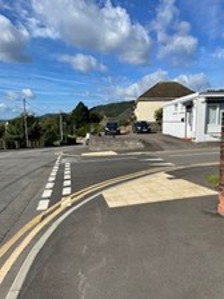
Bus-stop on Tonna Uchaf, Tonna
Raised roundabout
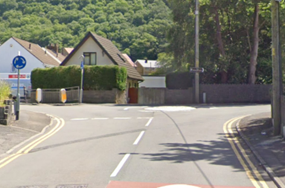
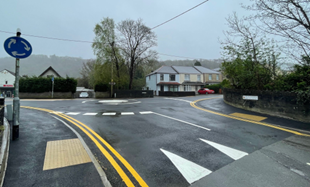
The introduction of a toucan crossing will help reduce vehicle speeds and alongside new parking restrictions on Village Road, will ensure safer crossing for all users. These measures enhance connectivity between the local residential area and key destinations such as Ysgol Bae Baglan and National Cycle Route 4.
Before and after photographs
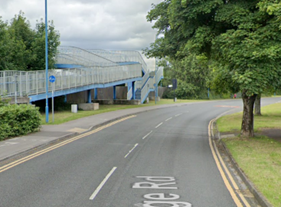
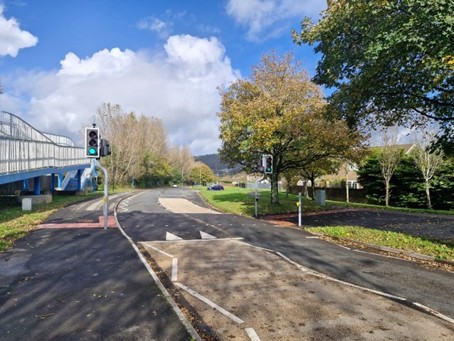
Village Road, Baglan. The new toucan crossing is a type of signal-controlled pedestrian crossing that allows both pedestrians and cyclists to cross the road at the same time.
Improvement to facilities
An access barrier is anything that restricts or prevents any users from accessing or travelling along walking and cycling paths.
Access barriers have historically been installed to stop motorbikes and mopeds from using paths illegally however they also prevent legitimate users (such as those with mobility aids or non-standard cycles) from walking, wheeling or cycling along the network. Barriers also affect people who are not able to get off their cycle to manoeuvre through or around them.
Since 2019 we have removed or replaced 59 non-compliant barriers, opening up access to our network of routes for all users. Funding will be used to build on works undertaken in previous years to replace non-compliant barriers and make our routes more accessible.
| Financial year | Number of barriers replaced with compliant bollards |
|---|---|
| 2019-2020 | 14 |
| 2020-2021 | 11 |
| 2021-2022 | 18 |
| 2022-2023 | 9 |
| 2023-2024 | 4 |
| 2024-2025 | 4 |
View a map of our barrier improvements under "Complaint barriers" and "Removed barriers"
If there are any other barriers you would like to see removed, please get in touch at greener@npt.gov.uk. We will assess the feasibility of altering these barriers.
Have you seen a motorbike or moped using Neath Port Talbot’s cycle paths illegally? If the answer is yes, then report it to South Wales Police.
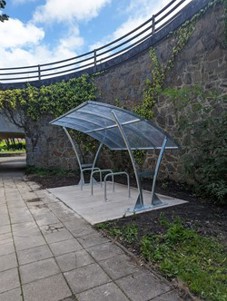
A bike can be costly and leaving it unattended makes it prone to theft or vandalism. Bike racks can help to provide a secure place for cycles while the rider is at their workplace, the shops or school. Installing cycle shelters could also encourage people to use bicycles as a means of transport. We have installed three cycle shelters in 2022/2023 in:
- Aberavon Shopping Centre
- Aberavon Beach
- Port Talbot Train Station.
Cycle hoops also have been installed in Cymmer near to the Refreshment Rooms, to replace cycle storage which had fallen into disrepair.
Free cycle stands
To help encourage more people to cycle, we are giving away up to four free cycle stands to organisations in locations where cycle parking is needed. More details and apply.
Securing your bike
Tips for locking your bike
- Use two bike locks when possible
- Always lock both the wheel and the frame together
- Never only lock the wheel or the frame of the bike to the stand

BikeRegister
In 2021 there were over 64,000 reported bike thefts in the UK. Having your bike stolen can be a huge inconvenience and very upsetting. But registering your bike means that if it's ever stolen and recovered by the police, it can be traced back to you. The BikeRegister is the UK’s national registration scheme. It's free, and it's preferred by the police as a way of registering your cycle.
Seating along walking and cycling routes can provide a much-needed place to rest. Outside of town centres there are generally fewer places to sit and have a break for those travelling between their homes and key destinations. So, we have started installing new seating alongside cycle routes in the county borough. In 2021-2022 eight new seats were installed. In 2022, a stakeholder consultation was undertaken to determine where additional seating is required. Proposed locations were evaluated, and seating was installed at three locations.
If there are any walking and cycling routes that you think need some seating, get in touch at greener@npt.gov.uk. We will assess the suitability.
Cycle storage and access barrier locations
See the cycle storage and cycle barrier locations we have mapped out:
This is not an exhaustive list. Email activetravel@npt.gov.uk to tell us about any you notice are missing.

